Ukraine Operating Environment: Deep-Strike Escalation and the Risk Outlook for International Organizations
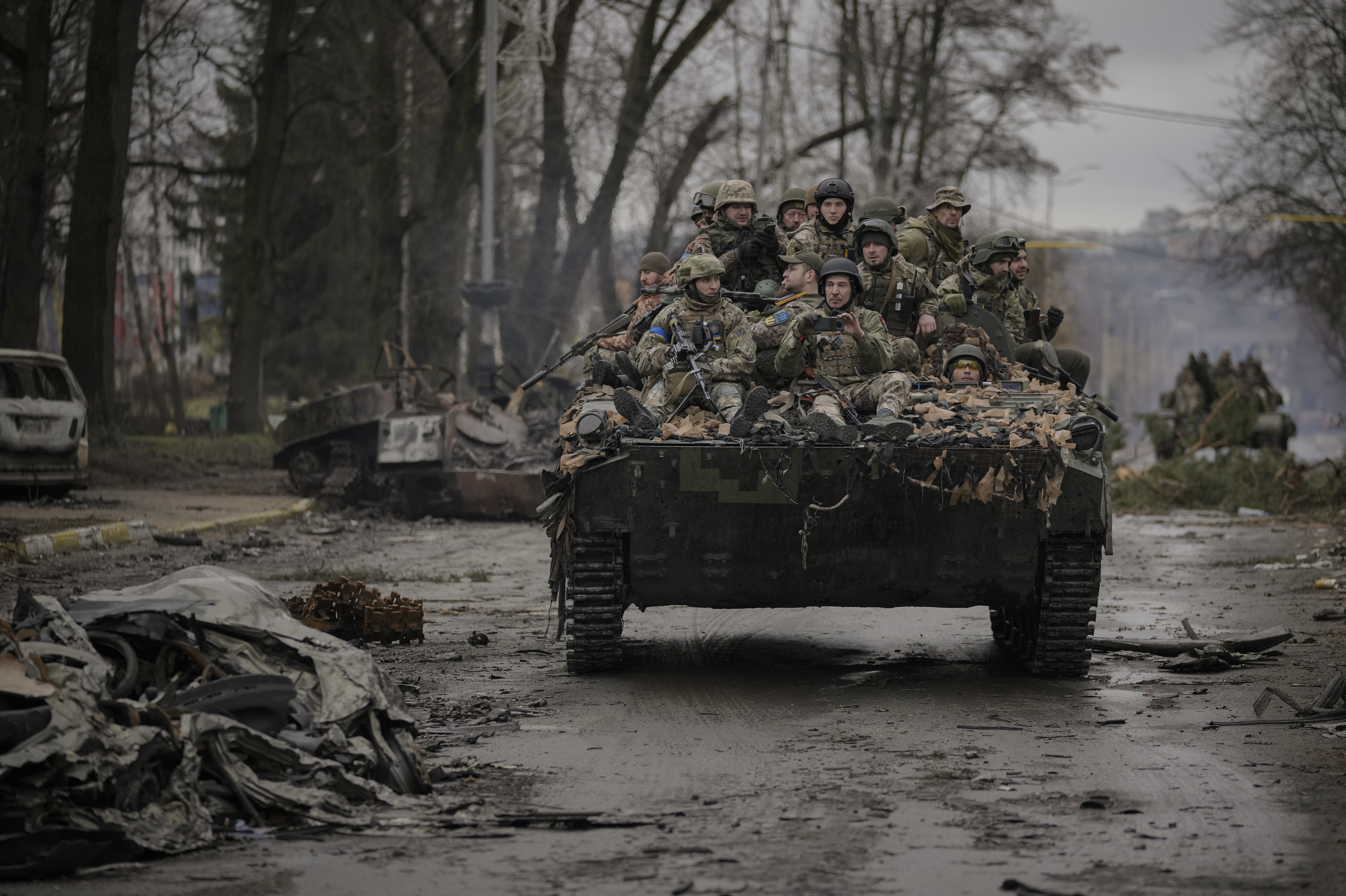
Bottom line
The defining feature of the period since late May is a mutual escalation of deep-strike campaigns, each driving the other. Ukrainian forces are systematically degrading Russia's oil infrastructure and rear-area logistics, while Russia is answering with mass missile and drone strikes against Ukrainian cities and high-value symbolic targets. The Belarus signal-repeater confrontation and the Crimea isolation campaign are extensions of the same logic: Ukraine is widening the cost perimeter of the war while the front line holds. For international organizations operating in Ukraine, the practical consequence is that large-scale strikes are now a routine planning variable rather than an exceptional event, and the geography of risk has widened, including into western oblasts previously treated as relatively low-exposure. No diplomatic de-escalation is in prospect, and Russian war aims remain unchanged.
What happened
Ukraine's deep-strike campaign was the period's primary development. Ukrainian forces struck the Moscow Oil Refinery twice within 72 hours in mid-June, in what Russian sources characterized as the most intense drone assault on the capital since the start of the full-scale invasion, followed by a third wave of roughly 60 drones on 21 to 22 June. The trend is clearly upward: documented strikes on Russian oil infrastructure rose from 18 in April to 33 in May and 28 through 22 June. The systemic effect is now observable, with fuel shortages and rationing reported across at least 15 Russian regions, Russia announcing plans to import gasoline by sea, and Crimea suspending civilian fuel sales entirely from 21 June. The campaign is likely exposing widening gaps in Russian air defenses and forcing a trade-off between defending the domestic population and sustaining frontline systems.
Russia's retaliatory strikes on Ukrainian cities intensified in parallel. The 14 to 15 June package combined roughly 70 missiles, including hypersonic and ballistic systems, with more than 600 drones, for close to 681 aerial targets in a single night. A drone struck the Dormition Cathedral of the Kyiv Pechersk Lavra, a UNESCO World Heritage site, and around 140,000 Kyiv households lost power. These strikes almost certainly serve to mask Moscow's failure to protect itself and to project a strength that Russia cannot demonstrate on the ground. Civilian casualties in 2026 are running roughly 20 percent above the equivalent 2025 period. Lavrov's standing recommendation that foreign embassies evacuate Kyiv, reiterated on 23 June, functions as an active coercive signal rather than a routine advisory.
The Belarus signal-repeater confrontation widened the threat geography. Zelensky disclosed Russian-installed repeaters in Homiel and Brest oblasts that he said were enabling drone strikes on energy infrastructure in Zhytomyr, Rivne, and Volyn, and gave Lukashenko a one-week ultimatum to remove them. The repeaters reportedly ceased operating on 22 June, ahead of the deadline, though independent technical verification is not yet available and the change is reversible. The episode confirms the mechanism by which Russian drones have been routed deeper into western Ukraine.
The Crimea isolation campaign is reshaping the southern logistics picture. A joint Ukrainian operation struck maritime logistics, oil infrastructure, and air defenses on both sides of the Kerch Strait on 21 June; Ukrainian forces destroyed a railway bridge over the North Crimean Canal on 23 June and struck the Saky and Hvardiiske airfields on 24 June. Ukraine's defense minister has stated the objective plainly, to turn Crimea into an island. The combined effect is a progressively contested and fluid logistics environment across southern Zaporizhia and Kherson.
The front line, by contrast, remains largely contained. Russian territorial gains fell roughly 92 percent between December 2025 and May 2026 against the equivalent prior-year period, and Ukraine recovered more territory in May 2026 than it lost. Putin's 23 June claim that Russian forces were practically reaching Kostyantynivka is assessed as inaccurate and as part of a sustained information effort. The war's center of gravity in this period sits in the deep-strike and logistics domains, not in ground manoeuvre. On the diplomatic track, Zelensky's early-June proposal for direct talks and a monitored ceasefire was dismissed by Putin, and senior Russian officials have reaffirmed maximalist terms; there is no detectable shift in Russian objectives.
What it means for organizations
Large-scale strikes are now a baseline operational variable. The scale and frequency of the June packages, combined with civilian casualties running above the 2025 pace, mean major strike events should be planned for as a recurring condition rather than an exception. The threat environment also rewards predictive monitoring: major Ukrainian deep strikes, particularly against Moscow, have been followed within roughly one to four days by Russian mass strike packages, making Ukrainian strike activity a usable leading indicator of elevated risk to Ukrainian cities.
The geography of exposure has broadened. The Belarus repeater mechanism guided drones deeper into Zhytomyr, Rivne, Volyn, and Kyiv oblasts, eroding the assumption that western Ukraine is a lower-threat environment. Central Kyiv, meanwhile, remains both a primary target and a coercive-threat environment, with demonstrated Russian intent and precision to strike the city center and a reiterated embassy-evacuation signal that is best read as deliberate pressure rather than evidence of a specific imminent attack.
Business continuity pressure is concentrated in the energy system, where repeated strikes have driven outages across multiple oblasts. The complication this period is that Russia's own fuel crisis is tightening regional supply, which has direct implications for generator fuel availability. Southern movement and logistics carry rising interdiction risk: the Crimea isolation campaign is generating a contested environment in southern Zaporizhia and Kherson, where exposure runs in both directions, from Ukrainian strikes on Russian logistics routes and from Russian drone saturation, including documented targeting of civilian vehicles in Kherson.
Advice
Reset the baseline. Treat major strike packages as a routine planning assumption, and verify that shelter protocols and after-hours staff-location procedures actually function under short-notice, high-volume attack rather than on paper.
Harden the Kyiv posture. Review shelter access and after-hours staff location for central Kyiv facilities, and incorporate Lavrov's reiterated evacuation recommendation into threat monitoring as a coercive signal, without over-reacting to it as an imminent-attack indicator.
Reassess western oblasts. Update exposure assumptions and contingency planning for staff and assets in Zhytomyr, Rivne, and Volyn, and do not rely on the 22 June repeater shutdown holding.
Pressure-test power resilience. Confirm generator and UPS coverage for critical sites, and actively verify generator fuel availability and resupply given the tightening regional fuel market, rather than assuming it.
Tighten southern journey management. Apply enhanced journey-management controls, or avoid movement through the southern Zaporizhia and Kherson logistics corridors where feasible, and treat Russian drone activity in Kherson as a direct threat to vehicles.
Use deep strikes as a warning indicator. Monitor Ukrainian deep-strike operations, especially against M
oscow, and raise alert posture for 24 to 96 hours afterward in anticipation of Russian retaliation.
Keep the Oreshnik in proportion. Fold Oreshnik alerts into standard ballistic-missile shelter procedures; in its current conventional configuration the weapon carries high psychological and disruptive value but limited additional lethality, and does not warrant separate treatment.