Ukraine Operating Environment: The Interceptor Gap
Bottom line
The defining development of the week is the collapse of Ukraine’s ability to intercept Russian ballistic missiles. Ukraine’s Patriot PAC-3 interceptor stocks are effectively exhausted, and in the two most recent mass strikes, on 1 to 2 and 5 to 6 July, none of the ballistic missiles fired at Kyiv were stopped, against an interception rate of roughly one-third earlier in the war. Russia has recognized this and is now leading its strike packages with ballistic and hypersonic weapons, the only munitions Ukraine currently cannot reliably intercept, while widening its target set to residential districts and civilian and commercial infrastructure. The NATO summit in Ankara produced a significant long-term answer, a US license for Ukraine to build Patriot interceptors alongside a large European funding pledge, but neither changes the picture for months. The result is a near-term window in which the ballistic-missile threat to Kyiv and the eastern cities is effectively undefended, and Russia has signaled that it intends to exploit it. Russian war aims are unchanged, and sources close to the Kremlin describe a posture of escalation rather than negotiation.
What happened
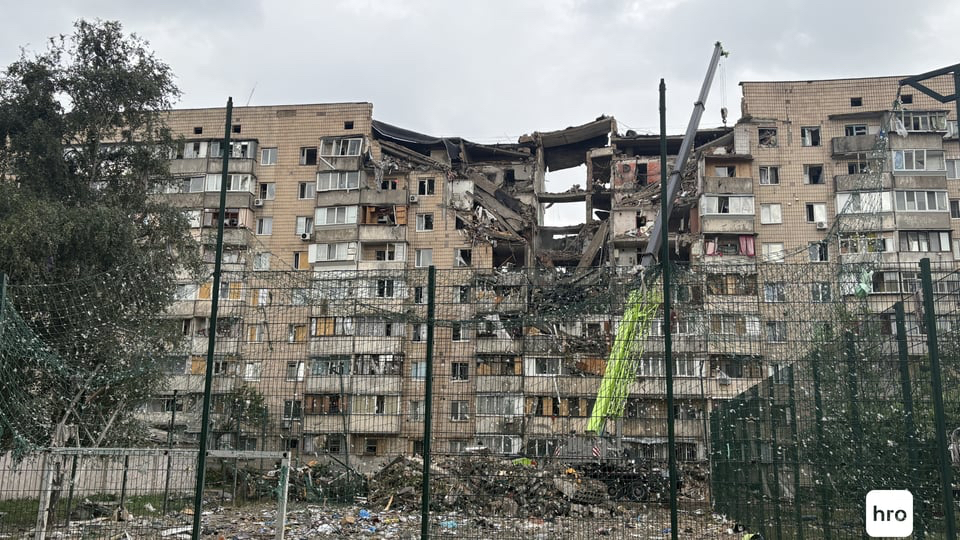
The air-defense picture was the week’s central fact. In the mass strike on Kyiv overnight on 5 to 6 July, the fourth large combined strike since 1 June, Russia launched more than 400 munitions, including 29 ballistic and anti-ship missiles, and Ukraine intercepted none of them, while stopping the large majority of the drones and cruise missiles. At least 22 people were killed and 58 injured in the capital, and around 30 residential buildings were hit. Zelensky attributed the zero interception rate directly to the depletion of Patriot interceptors. Ukraine has since changed how it uses its remaining Patriots, firing single interceptors rather than pairs, operating in manual mode to avoid spending them on cheap drones, and repositioning batteries to protect them, all signs of acute scarcity. Across the first half of 2026 Russia fired more than 500 ballistic missiles at Ukraine, more than double the same period last year, and Ukraine intercepted fewer than a third.
The strikes continued through the NATO summit, consistent with Russia’s practice of timing large attacks to major international events to intimidate Western partners. Further strikes on 6 to 7 and 7 to 8 July hit residential, energy, railway, and medical sites across at least eight oblasts, and a strike on Kharkiv on 8 July killed seven people and injured more than 120. Kyiv was struck twice in a single day.
The NATO summit in Ankara on 7 to 8 July was the strategic counterweight. Allies pledged around €70 billion in military support for 2026, and the United States announced it would license Ukraine to produce Patriot interceptors domestically. Both are meaningful, but neither offers near-term relief: production is optimistically two to three months from starting, deliveries under existing contracts are not expected before 2027, and the single Western manufacturer produces only around 600 interceptors a year against simultaneous demand from the United States, Gulf states, and Ukraine, with recent Gulf use against Iran having drawn down stocks. The tone between Washington and Kyiv was markedly warmer than earlier in the year, but firm new security commitments were limited.
Ukraine’s own long-range campaign reached a new peak, and remains the principal driver of Russian retaliation. Ukrainian forces struck the Omsk refinery in western Siberia, the deepest strike of the war at roughly 2,500 to 3,000 kilometers, reportedly completing a systematic campaign against all of Russia’s largest refineries. Ukrainian estimates put more than 40 percent of Russian refining capacity offline. Fuel shortages and rationing now affect nearly all of Russia’s regions, and Russia has suspended diesel exports and begun importing gasoline by sea. The pressure is real but has not shifted the Kremlin’s posture.
Two further developments bear directly on organizations. First, Ukraine deepened its blockade of Crimea, shifting to a naval-drone campaign against the shadow-fleet tankers Russia now uses to move fuel to the peninsula by sea, striking around 35 vessels in the 96 hours to 9 July, alongside continued attacks on Crimea’s power grid and a standing suspension of civilian fuel sales. Second, Russia widened its own campaign against Ukrainian civilian infrastructure, hitting gas stations more than 150 times over two months and striking postal and railway logistics, an effort to erode the fuel supply, distribution networks, and societal resilience that organizations depend on. The front line, by contrast, barely moved: Russian territorial gains have collapsed to a fraction of last year’s pace, and Russia’s claim to have captured Kostyantynivka in Donetsk Oblast was false as of the end of the period, with fighting continuing inside the town. Reporting from sources close to the Kremlin describes Putin rejecting ceasefire proposals and a high probability of further escalation, with some signaling that a mobilization decision may be approaching. No active negotiation track is in evidence.
What it means for international organizations
The single most important change is that the ballistic-missile threat to Kyiv and the eastern cities is now effectively undefended, and it is national in scope rather than confined to any region. The systems Ukraine still has in quantity can stop drones and cruise missiles but not ballistic ones, and the only system that can, the Patriot, is out of interceptors. Planning should assume no reliable active defense against ballistic strikes for the foreseeable term.
Warning time is the second problem. Ballistic missiles give very little flight time, and during the period several impacts were reported before or as alerts sounded. Shelter decisions that depend on waiting for confirmation are no longer safe; the practical protection is rapid movement to hardened shelter on the first indication, whether a siren, an explosion, or a credible advance warning.
The summit’s good news is a trap if it is misread. The Patriot license and the €70 billion pledge improve Ukraine’s position over a year or more, but they change nothing over the coming weeks, and Russia has openly acknowledged the interim gap. Threat posture should not be revised downward on the strength of the Ankara outcomes; the most exposed period is now, not later.
Russia’s widened target set changes the business-continuity picture. Residential districts, gas stations, postal hubs, energy nodes, and railways were all struck this period, which means staff residences, fuel supply, and logistics are exposed on the same basis as more obvious targets, and the effect is heaviest in the eastern and northern oblasts. The retaliatory cycle also remains the most usable forecasting tool: with Ukraine committed to a sustained long-range campaign, elevated retaliation risk should be treated as the baseline, and major Ukrainian strikes on Russian oil infrastructure and on Moscow read as leading indicators of incoming attacks.
Advice
Plan for undefended ballistic strikes. Recalibrate duty-of-care assessments for Kyiv and the eastern cities on the explicit assumption that ballistic missiles will not be intercepted, and brief staff accordingly.
Shelter on first indication, not on confirmation. Because warning can lag the impact, move staff to hardened shelter at the first siren, explosion, or credible warning rather than waiting to verify, and rehearse rapid movement so it is automatic.
Check shelters against ballistic effects. Confirm that designated shelters protect against the blast, overpressure, and fragmentation of a ballistic warhead, not only against drone or cruise-missile strikes, and reassess capacity and access times on that basis.
Do not downgrade on the summit. Hold current threat assessments despite the Patriot license and funding pledges; there is no near-term relief, and the interim window is the most dangerous phase for ballistic exposure.
Harden fuel and logistics resilience. Given Russian strikes on gas stations, postal hubs, and railways, pre-position fuel, build redundant supply lines, and plan for local rationing or closures, particularly in the eastern and northern oblasts.
Treat residences and offices as potential targets. Given the deliberate targeting of residential districts, apply the same risk standard to staff homes and offices in Kyiv and the east as to other high-value locations.
Keep deep strikes as a warning indicator. With Ukraine’s long-range campaign continuing, expect retaliation; monitor Ukrainian strikes on Russian oil infrastructure and Moscow and raise alert posture in the days that follow.