
The Gulf's Procurement Paradox: Why Heavy Defense Spending Did Not Translate into Defensive Resilience

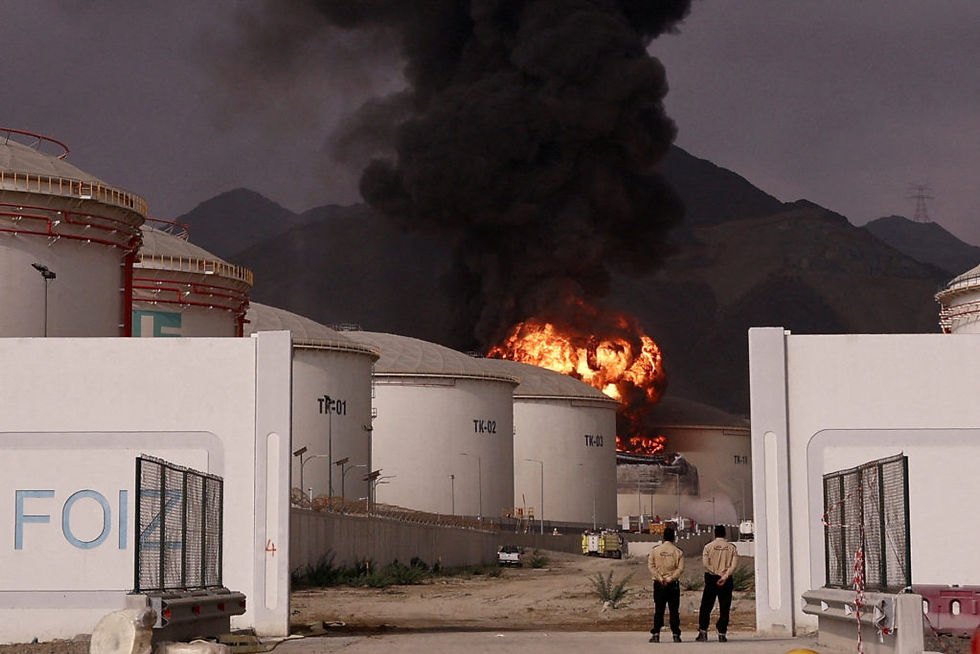
(Creator: Amr Alfiky | Credit: REUTERS)
When the Islamic Republic of Iran initiated its retaliatory air campaign against Gulf Cooperation Council (GCC) states on 28 February 2026, the early performance metrics suggested a vindication of two decades of regional defense investment. The United Arab Emirates' Ministry of Defence reported the interception of more than 530 ballistic missiles and over 2,200 one-way attack drones during the campaign's first six weeks, with reported Gulf-wide interception rates ranging between 80 and 90 percent — figures comparable to peak Ukrainian performance against analogous Russian salvos (Cancian and Park, 2026a). The U.S.- and Israeli-supplied Patriot, THAAD, and Iron Dome architectures performed largely as specified. The strategic question raised by the campaign, however, is not whether Gulf air defenses functioned, but whether the procurement model underpinning them is sustainable against the operational environment it was ultimately required to address.
By the end of March 2026, GCC states had collectively expended approximately 2,400 interceptor missiles against a pre-war regional inventory estimated at just under 2,800 units (Bloomberg, 2026). Reported national depletion levels reached approximately 87 percent in Bahrain, 75 percent in the UAE and Kuwait, and 40 percent in Qatar (JINSA, cited in Fox News Digital, 2026). The architecture held; it also approached exhaustion in the process of holding. This outcome reframes the central analytical question for Gulf defense planning. The relevant variable is not the technical performance of any individual system, but the structural mismatch between high-cost, low-volume defensive inventories and the high-volume, low-cost offensive ecosystems now characteristic of state and proxy actors across the region.
The thesis advanced here is that the Gulf states were not strategically unprepared because they underspent on defense; they were unprepared because the procurement logic they followed optimized for prestige deterrence in an era that has shifted decisively toward attritional warfare. This distinction matters for the post-ceasefire reconstitution debate now underway in Riyadh, Abu Dhabi, Doha, and Manama.
The cost-exchange asymmetry
The campaign exposed an unfavorable economic exchange ratio that has been documented in adjacent theaters but not previously tested at scale against Gulf inventories. Iran's Shahed-136 and its derivatives are estimated to cost between USD 20,000 and USD 50,000 per unit; the Patriot PAC-3 interceptors employed against them carry unit costs in the range of USD 4 million (Cancian and Park, 2026b). Even the alternative interceptors employed when Patriot stocks tightened — including AIM-120 air-to-air missiles fired from rotary and fixed-wing platforms — exceed USD 1 million per round (Cancian and Park, 2026b). Hollenbeck et al. (2025), examining Russia's analogous drone-strike economics in Ukraine, identified this asymmetry as the defining feature of contemporary saturation campaigns: the defender pays orders of magnitude more per engagement than the attacker, and inventory replenishment timelines (three to five years for high-end interceptors) materially favor the offensive side.
Iranian targeting behavior during the 2026 campaign appears to have been calibrated to exploit this asymmetry. CSIS analysis of the campaign's first week observed that Tehran sequenced cheap drone salvos ahead of ballistic missile waves, plausibly to draw down interceptor inventories before more demanding threats arrived (Cancian and Park, 2026a). The strategy is consistent with what Iranian doctrine has long described as "imposed cost" — and what one regional analyst characterized as "death by a thousand cuts… the preferred strategy of the weaker combatant" (Grieco, cited in The Economist, 2026).
The integration deficit
The second structural finding concerns regional coordination, or its absence. The 2026 campaign was the first in which all six GCC states were targeted simultaneously by a single state actor (ACLED, 2026) — a scenario long anticipated in Gulf strategic planning but not architecturally addressed. Bakir (cited in Breaking Defense, 2026) summarized the institutional gap with notable directness: "Collective coordination among Gulf states remains limited at best and operationally non-existent beyond the public statement." The defensive response was effective but distributed across six parallel national efforts, supplemented by U.S. CENTCOM coordination, British aircraft operating from Cyprus and Qatar, French Rafales over Emirati bases, and an Israeli Iron Dome battery deployed to Abu Dhabi (Times of Israel, 2026). This corresponds to what Cordesman (2020) characterized two decades ago as Gulf missile defense progressing "on a country-by-country basis rather than as part of an integrated effort to create effective regional defenses" — a structural critique whose continued accuracy in 2026 is itself the relevant data point.
The missing layer
The third finding concerns the absence of a low-cost interception layer. CSIS analysis of the campaign concluded that "countering mass drone attacks cannot rely primarily on traditional air defense missiles" and identified interceptor drones as the operationally and economically necessary lower tier of any future architecture (Cancian and Park, 2026a). The Ukrainian model, in which domestic production reportedly exceeded 100,000 anti-Shahed interceptors in 2025 with combat success rates above 60 percent (Ukrainian Ministry of Defence, cited in Cancian and Park, 2026a), demonstrates the production scale required. The Gulf entered the 2026 campaign without an equivalent layer; the Iron Beam directed-energy system reportedly transferred from Israel to the UAE during the conflict was, by the manufacturer's own account, prototype-stage and not yet integrated into Israel's own operational architecture (Financial Times, cited in Times of Israel, 2026).
The doctrinal pattern is observable. Gulf procurement has historically rewarded high-visibility platforms — F-35s, THAAD, Rafales — while underinvesting in the operationally critical middle tier of the kill chain: short-range jammers, distributed electro-optical detection meshes, low-cost interceptor drones, and the data-fusion software required to integrate them. These categories do not signal sovereignty in the manner of a fifth-generation fighter, but they constitute the layer that determines outcomes in a saturation engagement.
Implications for adaptation
The post-ceasefire trajectory suggests partial recognition of these findings. Reported diversification toward lower-cost South Korean air-defense platforms (TheDefenseNews, 2026), accelerated intelligence-sharing with non-traditional partners, and renewed discussion of indigenous interceptor-drone production indicate movement. Whether these adjustments produce the integrated, attrition-resilient regional architecture that thirty years of GCC defense diplomacy has not delivered remains the open empirical question.
The campaign's analytical legacy may be less about Iranian capability than about the limits of capability acquisition as a substitute for capability integration. Gulf air defenses in 2026 did not fail; they succeeded into structural depletion. The next campaign — and regional analysts uniformly assess that one will occur — will be decided not by the unit performance of any individual interceptor, but by which side has resolved the cost-exchange and integration problems first.
References
ACLED. (2026, March 4). Middle East Special Issue: March 2026.
Bloomberg. (2026, March 30). Iran Missile Strikes Deplete Gulf Interceptors, Raising US Defense Pressure.
Breaking Defense. (2026, March 3). 'Nightmare scenario' for GCC countries, region as Iran unloads drones and missiles.
Cancian, M. F., & Park, C. H. (2026a). Unpacking Iran's Drone Campaign in the Gulf: Early Lessons for Future Drone Warfare. Center for Strategic and International Studies.
Cancian, M. F., & Park, C. H. (2026b). Last Rounds? Status of Key Munitions at the Iran War Ceasefire. Center for Strategic and International Studies.
Cordesman, A. H. (2020). The Gulf and the Challenge of Missile Defense: Net Assessment Indicators. Center for Strategic and International Studies.
Fox News Digital. (2026, March 26). Iran's cheap drones are draining costly US and Israeli interceptors.
Hollenbeck, N., Altaf, M. H., Avila, F., Ramirez, J., Sharma, A., & Jensen, B. (2025). Calculating the Cost-Effectiveness of Russia's Drone Strikes. Center for Strategic and International Studies.
TheDefenseNews. (2026, March 31). Gulf States Use 2,400 Interceptors as Iran Conflict Pushes Patriot Stocks Toward Depletion.
The Economist. (2026, March). Are Gulf states running out of missile interceptors?
Times of Israel. (2026, April). Israel sent laser system to UAE to help intercept Iranian missiles and drones — report.


Comments